Part A · Foundations
The Twelve Rashis
Dvadasha Rashi · guna, dharma, dosha
The numbers written in a chart are rashis. A rashi is one 30-degree section of the sky and a currency of energy, with its own guna, dharma and dosha. It is an environment, never a person: it gives every event its flavour, and the graha who walks into it is the character.
In one minute
- Numbers, not names: a chart shows only the numbers 1 to 12. 1 is always Mesha, 12 is always Mina, in every chart.
- Never the house number: 6 in the top diamond means Kanya is in the 1st house, never "the 6th house".
- The lords: seven grahas own the twelve rashis; Ketu shares Vrischika and Rahu shares Kumbha.
- A currency, an environment: each rashi has its own guna, dharma, dosha. It is a place, never a person.
- The weight: the rashi carries 40 percent of a prediction, and the major predictions come from the rashi.
Quick facts
- Rashis
- 12, each 30 degrees of a 360-degree circle
- In a chart
- Written only as the numbers 1 to 12
- The top number
- The lagna rashi; count up by one, counter-clockwise
- Lords
- Seven grahas; Ketu with Vrischika, Rahu with Kumbha
- Weight
- House 40, rashi 40, graha 20
- Read as
- The house says what, the rashi says how, the graha says who
The numbers written inside are rashis
Whenever you look at a kundli you will see numbers written in it, something like this: 5, 6, 7, 8, 9, and after 12 come 1, 2, 3 and 4. So the question comes: what are these numbers? They represent the rashi. In a kundli you will not find the names of the rashis written anywhere. You will find only numbers.
Wherever 1 is written in a kundli, we call it Mesha rashi. Where 2 is written, Vrishabha. Where 3 is written, Mithuna; 4, Karka; 5, Simha; 6, Kanya; 7, Tula; 8, Vrischika; 9, Dhanu; 10, Makara; 11, Kumbha; and where 12 is written, Mina.
Keep this in mind: these are the numbers of the rashis. When you receive a real chart, the numbers written inside are rashi numbers, not house numbers. This is the thing that confuses beginners. So when you see 8 in one box, 5 in another and 11 in a third, ask yourself what each number is. It is signifying the rashi.
The rishis gave the twelve divisions twelve rashis, and they said that the energy of each one is different. Here they are. Please learn the names and the numbers together, and make notes of this at least, because everything else stands on it. Keep it beside you until you no longer need it.
| No. | Rashi | English | Lord |
|---|---|---|---|
| 1 | Mesha | Aries | Mangala (Mars) |
| 2 | Vrishabha | Taurus | Shukra (Venus) |
| 3 | Mithuna | Gemini | Budha (Mercury) |
| 4 | Karka | Cancer | Chandra (Moon) |
| 5 | Simha | Leo | Surya Narayana (Sun) |
| 6 | Kanya | Virgo | Budha (Mercury) |
| 7 | Tula | Libra | Shukra (Venus) |
| 8 | Vrischika | Scorpio | Mangala, and Ketu (mainly Ketu) |
| 9 | Dhanu | Sagittarius | Brihaspati, Guru (Jupiter) |
| 10 | Makara | Capricorn | Shani (Saturn) |
| 11 | Kumbha | Aquarius | Shani, and Rahu (mainly Rahu) |
| 12 | Mina | Pisces | Brihaspati, Guru (Jupiter) |
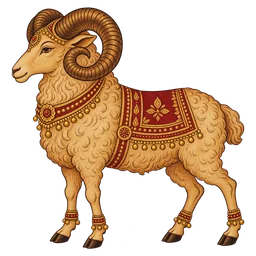
1
Mesha
Aries
Mangala
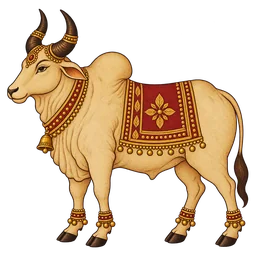
2
Vrishabha
Taurus
Shukra
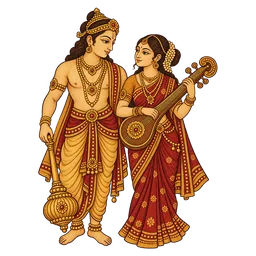
3
Mithuna
Gemini
Budha

4
Karka
Cancer
Chandra
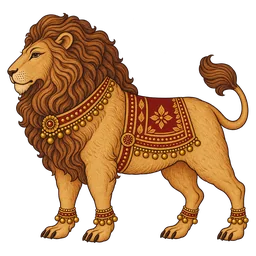
5
Simha
Leo
Surya
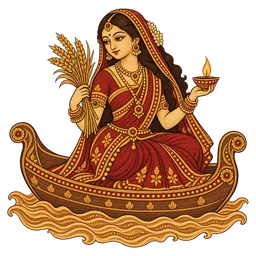
6
Kanya
Virgo
Budha
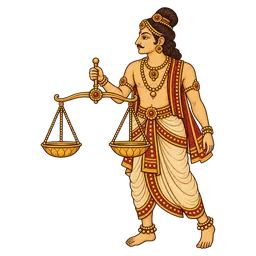
7
Tula
Libra
Shukra
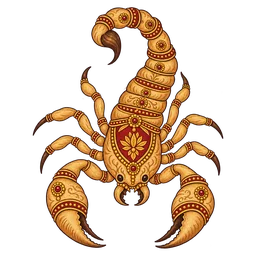
8
Vrischika
Scorpio
Mangala, Ketu
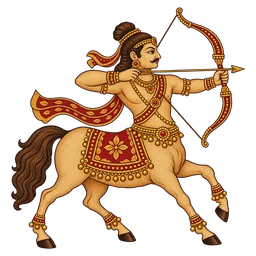
9
Dhanu
Sagittarius
Guru

10
Makara
Capricorn
Shani
11
Kumbha
Aquarius
Shani, Rahu

12
Mina
Pisces
Guru
In every kundli, the same number represents the same rashi. 5 is always Simha, 8 is always Vrischika, 10 is always Makara, 11 is always Kumbha. But any rashi can come in any house. That is why you have to remember the numbers, not the positions. The numbers go in a circle: after 12 (Mina) comes 1 (Mesha) again. This matters every time we count houses.
Why do I make you memorise these twelve? Because it is from the rashis that we make predictions. Rule one of this course is to derive, not to cram (Chapter B0). But these twelve you must know by heart. Say them again and again until it is memorised. When you remember them, you will have far less trouble and you will read any kundli comfortably.
The rashi in the 1st decides every other house
The first thing I do with any chart is look at the number in the top diamond. That is the rashi rising, the lagna. Then the numbers rise by one, counter-clockwise around the chart. With 6 at the top: 6, 7, 8 and so on up to 12, then 1, 2 and up to 5.
Walk it once with me. With Kanya in the 1st: Tula is in the 2nd, Vrischika in the 3rd, Dhanu in the 4th, Makara in the 5th, Kumbha in the 6th, Mina in the 7th, Mesha in the 8th, Vrishabha in the 9th, Mithuna in the 10th, Karka in the 11th and Simha in the 12th. The number in a box is always the rashi that lives in that house.
Choose the number written in the top diamond:
Tap any house to read it.
Another person born with Mesha (1) rising has Mesha in the 1st, Vrishabha in the 2nd, Mithuna in the 3rd, and so on. The houses are the same, the rashis are different. Same box, different colour. That is why the same house gives different results for different people.
Kanya rising
Kanya in the 1st, Tula in the 2nd, Vrischika in the 3rd, and on round the chart.
Mesha rising
Mesha in the 1st, Vrishabha in the 2nd, Mithuna in the 3rd, and on round the chart.
So once you know the rising rashi, you know the rashi in every house. Write the number of the rising rashi in the 1st house and go round adding 1 each time, returning to 1 after 12. I will make you practise this until it becomes automatic; Chapter A5 gives you the quick formula. And it works backwards too: tell me the rashi in any one house, and I can tell you the lagna. Chapter B0 shows you how.
The lords of the rashis
Every rashi has a lord, its swami, the graha who owns it. The lord of Mesha is Mangala; in English we call him Mars. The lord of Vrishabha is Shukra, Venus. Mithuna's lord is Budha, Mercury. Karka's lord is Chandra, the Moon. The lord of Simha is our Surya Narayana, whom we call the Sun.
Kanya's lord is again Budha. Tula's is again Shukra. Dhanu's lord is Guru, Brihaspati, Jupiter. Makara's lord is Shani dev, Saturn, and Kumbha's lord is again Shani. Mina's lord is again Guru. Learn the rashi, its lord and the English name together: Mesha, Mangal, Mars. Those three facts go as one.
- Karka4
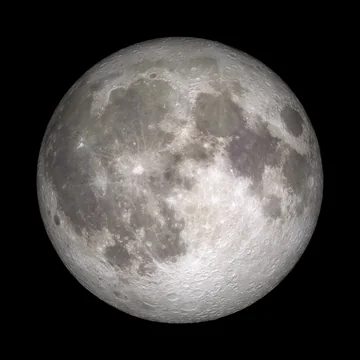 Chandra
 Surya5Simha
- Mithuna3
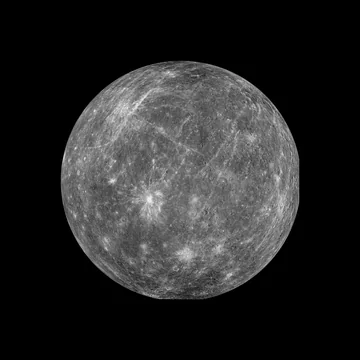 Budha6Kanya
- Vrishabha2
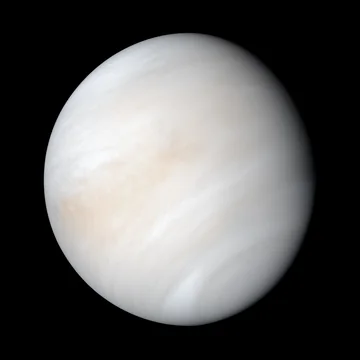 Shukra7Tula
- Mesha1
 Mangala8Vrischika+ Ketu, mainly
- Mina12
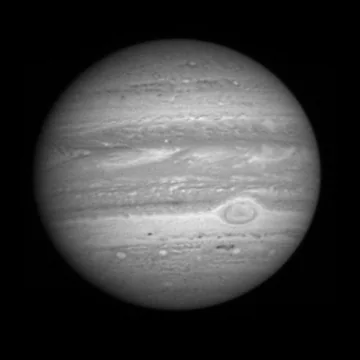 Guru9Dhanu
- Kumbha11+ Rahu, mainly
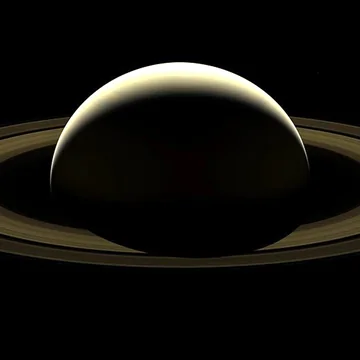 Shani10Makara
So Surya and Chandra own one rashi each. Mangala, Budha, Shukra, Brihaspati and Shani own two each. You have to remember this table; we use it in every chapter.
Two rashis with two lords
Vrischika has two adhipati, two ruling lords. In the beginning, understand it as Mangala. In the table in the book only Mars is written for Vrischika, but it is not only Mars. Whoever has the book with him, add Ketu in your notebook: Vrischika is Mangala plus Ketu, and mainly we take Ketu.
Kumbha is also ruled by two: Shani plus Rahu, and mainly we consider Rahu. We will see in the chapters how important the lord is. For the first drills in Chapter A5 we use Mangala and Shani, as I did in the first classes.
The owner of the rashi in the 1st is your lagna lord, the king of your chart. Where he goes, and what sits on his throne, is the first thing we read in Part B. How to find him is in Chapter A5.
A rashi is a currency
After the houses and the twelve divisions came the next thing, which we call energy. We see energy in the form of currency.
So what is a rashi? It is sampada, an asset or treasury; it is currency. What is India's currency? The rupee. America's is the dollar. Japan's is the yen. Each is the currency of a different country, its own currency. In the same way, each rashi is a different currency of energy, and it works in your life as an energy.
And what does the rashi tell us? Its guna, dharma, dosha: its qualities, its nature and its faults. It is these that we have to understand in detail, rashi by rashi.
A rashi is an environment, not a person
This is the most common mistake I see. A student says: "He is Mesha, so he is aggressive." No. Mesha is a place. Think of Mesha as an environment of starting, pushing and fighting for the first position. A graha walking into that environment behaves according to its own character and according to what the environment demands.
Let me give you the kitchen example I always use. Imagine four people: a doctor, a thief, a child and a king. Put each of them in a kitchen. The kitchen is the same, but what happens in the kitchen depends on who is standing in it. Now put the same doctor in a hospital. The doctor is the same; the setting is different. The setting, the kitchen or the hospital, is the rashi. The person is the graha.
So the rashi always gives the flavour. The event always comes from the house. And when a graha is sitting there, there is a flavour of the rashi and of the graha together.
The rashi always gives the flavour. The event always comes from the house.
Each rashi needs its own nourishment
Because each rashi is a different currency, each one is fed by something different. Karka is fed by emotional comfort. Mesha is fed by being allowed to start new things. A king's environment is fed by position and respect. Dhanu is fed by freedom of belief and learning.
Take that currency away, and the person suffers. When we stop watering the rashi of the lagna, the lagna dies, and illness comes when the energy of the lagna becomes weak. So when it is a question of killing a person or keeping him alive, the energy of the lagna becomes very important. It has to be maintained and nourished.
Karkaemotional comfort
Meshabeing allowed to start new things
Poshan
nourishment
A king's environmentposition and respect
Dhanufreedom of belief, and learning
Not every person is affected by the same thing. In Chapter B1 you will see how this decides whether the lagna stays alive.
Why the rashi is the heart of this course
I will tell you honestly where the major predictions come from: from the rashi. The houses are like the basics, and basics you must know. That is why in my classes I go fast through the houses and very slowly through the rashis. The main thing I have to teach you is the rashi, not the house.
So this is the order of the course: first the twelve houses, then a set of practice classes, and then the twelve rashis in full depth, from notes I keep working on every day.
As the houses develop, I keep introducing the rashis along the way. Nobody should get depressed that there is too much content. I give you extra points now, so that when you revise after a month or two you will say, "Ah, he taught this there." Take it like a crash course: fast, but cut to cut. Then the practice will be fun.
A student asked: "What about aspects and nakshatras? What percentage do they carry?"
For now, we take nothing from them. In this stage we are dealing with only 40 to 50 percent of prediction, and I will not mix things. When the aspects come, we will learn them clearly: the 4th aspect, the 7th aspect, pada drishti, the dvipada and chatushpada drishti, the 75 percent drishti. That comes when we reach the predictive part, in the rashis.
And understand one more thing: it is not only the grahas that have aspects. The rashis also have aspects, and that is more important. The rashi aspects I replace with the padas of Jaimini. I am a Vedic plus Jaimini astrologer, and Jaimini will be used very heavily going forward.
The twelve rashis one by one
Here is each rashi as an environment: its guna, dharma, dosha, what you will find in it, its lord, and a few glimpses of how it shows in the houses. Whenever a line says "he" or "the person", it means the native living in that environment, never the rashi itself. The glimpses are only pointers. The full teaching of each rashi in each house sits in that house's chapter.
| No. | Rashi | Lord | The environment in one line |
|---|---|---|---|
| 1 | Mesha | Mangala | Fire, speed, logic and always something new; no storage |
| 2 | Vrishabha | Shukra | The bull: Lakshmi's milk and curd, collecting, stubbornness, Parashurama |
| 3 | Mithuna | Budha | Talk, information, devices and stationery, and "everything mine" |
| 4 | Karka | Chandra | Mother, home, comfort, water and emotion; unpredictable |
| 5 | Simha | Surya | The king's court: position, respect, the kept word, balance and regularity |
| 6 | Kanya | Budha | Corrections, cleanliness, time and the SOP; no emotion |
| 7 | Tula | Shukra | Relationship, balance, diplomacy and measured give and take |
| 8 | Vrischika | Mangala and Ketu | Secrets, quiet depth, sudden explosions and grudges |
| 9 | Dhanu | Brihaspati | Dharma, scripture and the promise that must be kept |
| 10 | Makara | Shani | The crocodile's "mine", the boundary and the mines |
| 11 | Kumbha | Shani and Rahu | Networks, groups, SIM cards and Rahu's obsessive pull |
| 12 | Mina | Brihaspati | Giving, the roof, spirituality and surrender |
Mesha
Fire, speed, and always something new
Mesha is rashi number 1, Aries. It is the first rashi, and its environment is the environment of starting.
Its guna, dharma, dosha
- Fiery, technical, logical and fast.
- Pitta-pradhan, pitta-dominant: an environment that brings quite a lot of anger.
- It is of samhar, destruction. So in this environment the demand always comes very strongly: "We want this thing."
- It is of new things: whatever is new gets started here.
- It is the rashi of the army commander.
What you will find in it
- Regular initiative: new work, new things, always enthusiasm for something new.
- The cycle of Mesha: we start things, they die slowly, we start again, they die again.
- No patience: things have to be done immediately.
- No storage. Mesha has no storage energy, so money does not stay; it gets spent.
Its lord
Mangala. Mesha in a house brings Mangala's nature there.
Glimpses from the houses
- On the lagna: such a person needs to keep starting things. Shame him for every unfinished start, and he lives in guilt (B1).
- In the 2nd: fast, logical, technical speech; mouth ulcers and a dry throat from pitta; money that does not stay; great care of the home and family; and a commander who arranges the ration and can feed a whole bhandara (B2).
- In the 3rd: the person thinks very fast and has no patience; children nearby play cops and robbers, and there is a police station or a fire-alarm system close by (B3).
- In the 4th: Mesha in the 4th means Mangala, so things are always being broken and rebuilt at home (B4).
- In the 9th: a father who keeps starting new things and giving instructions. With Brihaspati in Mesha there: a person egoistic and fanatic about his religion (B9).
- Shani in Mesha tells his lie in a hurry (B2).
Vrishabha
The bull, Lakshmi's milk, and collecting
Vrishabha is rashi number 2, Taurus. It is the sign of the bull, and it is a very good rashi.
Its guna, dharma, dosha
- It is the rashi of Ma Lakshmi. That is why milk, curd and things to eat and drink are always there.
- It is Parashurama's rashi. Touch a member of the family where Vrishabha sits, and the person becomes Parashurama: if he wants, he can destroy you immediately.
- Adiyal, stubbornness, the nature of the bull. Once the person here has decided, "I have to go this way," and you come in between, he knocks you down and goes through.
- Ego: "My word must have value."
What you will find in it
- Accumulation: things and resources are collected here. The mind in this environment already wants to collect.
- A good khandaan, a good lineage.
- Banks: when Brihaspati sits in a rashi of Shukra such as Vrishabha, he makes banks.
Its lord
Shukra.
Glimpses from the houses
- In the 2nd: excellent savings, a rich lineage, no shortage of milk and curd, and a very strong neck, because its energy goes into the 3rd. Vrishabha in the 2nd I have always seen as very good (B2).
- Vrishabha lagna puts Karka, naturally a water sign, in the 3rd. Many such people are in the navy: a collecting mind suits a ship, where everything runs from the storehouse and the kitchen is very big (B3).
- In the 10th: a person who handles many resources (B10).
Mithuna
Talk, information, devices, and "mine"
Mithuna is rashi number 3, Gemini. Its environment is talk, information and the things of Budha.
Its guna, dharma, dosha
- A lot of talk. In speaking, the person here is a pandit: shlokas, songs, lokokti (proverbs), he memorises all of them instantly.
- Information is gathered here.
- Thinking of oneself. In this sense I call Mithuna a very mean sign: wherever it goes, we think of ourselves. My money, my communication, my device, everything mine. The family also becomes "me, me". The material calls it "self-serving"; I write it softly because you get offended.
What you will find in it
- Budha's things: earphones, mobiles, electronics of every kind, stationery.
- A child with Mithuna here always has a full geometry box: many pens and pencils, sketch pens, a three-colour pen and a four-colour pen too.
Its lord
Budha.
Glimpses from the houses
- In the 2nd: the family is kept joined, yet the people at home are matlabi (selfish) and will not help; the mother has a fondness for travelling and roaming; and the person does not let you speak and keeps talking himself (B2).
- In the 10th: work in communication (B10).
Karka
Mother, home, water and emotion
Karka is rashi number 4, Cancer. Karka is the rashi of emotions.
Its guna, dharma, dosha
- It represents the mother, the home, the comfort zone, food habits, water and emotions. It is naturally a water sign.
- What nourishes it is emotion. Stop watering it, and it dries up.
- Moods: today the person talks, tomorrow he will not, the day after he talks again.
- Very unpredictable, with no logic. Nobody knows when what will happen: who will cry, who will die, who will throw something.
- Sweet speech, and the search for happiness and peace.
What you will find in it
- A need for comfort and personal space: "I can fight everywhere, but not in my room. In my room I need rest, no argument."
- Someone else cooking in this kitchen, or using this bathroom and personal space, is all right for a few days, and then it becomes an inconvenience.
- Decisions without logic: "You built the house, but you earn anyway. Leave the property; give it to your younger brother. Why do you need it?"
Its lord
Chandra.
Glimpses from the houses
- On the lagna: send such a person into a toxic, envious environment and the body slowly suffers. A Karka-lagna woman whose mother-in-law turns every comfort zone into hell can go into depression (B1).
- In the 2nd: emotional drama and kalesh at home, sweet speech and mood swings (B2).
- In the 3rd of a Vrishabha lagna: water all around, and the navy (B3).
Simha
The king's court: position, the kept word, and balance
Simha is rashi number 5, Leo, the rashi of Surya Narayana. Its environment is the king's court.
Its guna, dharma, dosha
- Authority, position, status and prestige.
- Justice, and the kept word: "Look, what I say, I do. I like only people who do what they say. I don't like people who work behind my back."
- Balance and regularity: once a standard is set, it must be kept.
What you will find in it
- Orders, not requests. In a king's court the instructions are clear-cut: "Mantri-ji, you have to do this. Mantri-ji will see to this; that one will see to that."
- Fresh, balanced food, neither too hot nor too cold nor too spicy, and on time: if breakfast is at 8, it is at 8 every day. Surya balances kapha, pitta and vata.
- A belief that money sits with power: "Only the politician earns money. Whoever has power, authority and servants, whoever is true to his word, has money."
Its lord
Surya Narayana.
Glimpses from the houses
- A lagna with a king's energy needs position, respect, a managerial role and people under him: "I will work less, because I am the king; I am a bit lazy, still say nothing to me." Make such a man work like a servant and insult him, and he slowly goes down into depression (B1).
- In the 9th: a father who is authoritative and always balanced (B9).
- In the 2nd: a respected lineage; he wants to be the head of the family and speaks with authority: "I am the head of the family; you should respect me." (B2)
- Simha lagna puts Kanya in the 2nd, so the king speaks in SOP, and when his salary comes the EMIs are already fixed (B2).
Kanya
Corrections, cleanliness, and the SOP
Kanya is rashi number 6, Virgo. Its environment is correction and procedure.
Its guna, dharma, dosha
- Small mistakes are always picked out and corrected: "Look, you are messing up here. This can be refined a bit. These four things you are doing, refine them. See which one is working and which is not, and sideline what is not working."
- Cleanliness: keep the room clean, keep the house clean, keep the body clean.
- Time: "Everything has its time, babu. Breakfast in the morning, lunch at lunch time, dinner at dinner time. Learn to live like a human being."
- Always by rule, by the SOP, the set procedure.
- Point to point, without emotions. People say to the person here: "Why are you so emotionless? Why can't you understand? I can't work like a machine every day."
What you will find in it
- A fixed menu: idli today, rice tomorrow, khichdi the day after, then chhole bhature.
- Money by procedure: "This scheme gives 5 percent, put some money there. This one comes out quickly, put one and a half to two lakh there. Keep some liquid cash. Store the rest in bonds."
- Fear, alongside the SOP.
- Problem-solving for pay. In an IT worker Kanya is prominent, because he is paid to solve problems.
Its lord
Budha.
Glimpses from the houses
- In the 2nd: speech in SOP format, "first this, then the second floor, then father will come"; wealth kept in legal documents and bonds; disputes over family land (B2).
- In the 3rd: abuses and corrections while driving, "Brother, don't you know how to drive? How did you cut from the side?" (B3).
- In the 4th: a poor neighbour, people at home who are often ill, and conflict at home (B4).
Tula
Relationship, balance, and measured give and take
Tula is rashi number 7, Libra. Its environment is the relationship.
Its guna, dharma, dosha
- Relationship first: "Let's solve it by relationship. Let's not go beyond this. This is creating conflict; let's stay together."
- A bit of diplomacy, a bit of compromise, and always balance.
- Measured give and take: "Bua's children spent 7,000 at our wedding. We will spend 7,500, because there is 7 percent inflation too. Whenever they come, they bring something; we should give too."
- A diplomat's way of thinking: "We need to get work done from him; give him some resource."
What you will find in it
- Surya is debilitated in Tula. Surya gives independence, "We are enough in ourselves; we don't need you." In Tula he says, "Come along with us." He works after asking, always needs a partner and guidance, cannot do it by himself, and doubts himself. Tula is Shukra's rashi, so such a person keeps searching for the partner.
- Shani is exalted in Tula: patience, and if two or three lies have to be told to save the relationship and keep peace in the family, he tells them.
- With Brihaspati in Tula, the husband is also the guru.
- As a place to eat: a very good restaurant.
Its lord
Shukra.
Glimpses from the houses
- In the 2nd: balanced, diplomatic speech and excellent resource management, and a balance always to be found between the family and the wealth. Kanya lagnas, who have Tula in the 2nd, are very good at managing the family: who should get how much (B2).
- In the 5th: a girl who, whenever money runs short, makes a boyfriend (B5).
Vrischika
Secrets, quiet depth, and the sudden explosion
Vrischika is rashi number 8, Scorpio. Its lords are Mangala and Ketu, and mainly we take Ketu. Its environment is the secret.
Its guna, dharma, dosha
- Secrets. Nobody has a bigger secret than the person in this environment. Decode him, and you decode everything.
- Problems are solved quietly here, but words can suddenly explode.
- Deep grudges: "This family of mine has never been of any use to me." There is always some drama.
What you will find in it
- Silence about money and family matters.
- Hidden relationships: you cannot tell whether he has one or not.
Its lords
Mangala and Ketu; mainly Ketu.
Glimpses from the houses
- In the 2nd, for a Tula lagna: secrecy about money and family, grudges, "you cannot imagine what these people always do to me", and much trouble with the father (B2).
- In the 5th: you cannot tell whether he has a relationship or not, and he thinks of his girlfriend every night (B5).
- On the lagna: once you decode a Vrischika-lagna client, he tells you everything (B2).
Dhanu
Dharma, scripture, and the promise
Dhanu is rashi number 9, Sagittarius. Its environment is dharma.
Its guna, dharma, dosha
- Dharma and belief: what one eats, which temple one goes to, which deity one worships, higher education, the study of jyotish.
- The promise: "When you said it, you promised to do it. Why didn't you deliver? You should have done it, or you should have told me before. How can you not do it after saying it?" This is Brihaspati and Dhanu together.
- A lot of talk, with the background of religion, dharma and the scriptures, and the person here is very good in religion too.
What you will find in it
- Vegetarian food, one's own temple, one's own deity, and the desire to learn.
- The material says Dhanu speaks less, with wisdom. That is wrong. Dhanu speaks a lot.
Its lord
Brihaspati.
Glimpses from the houses
- On the lagna: force such a woman to eat non-veg, take her to another temple, stop her worship, her higher education, her astrology, and slowly she falls ill (B1).
- Dhanu lagna puts Makara in the 2nd: he cannot bear to use anyone else's things, so he buys everything himself, three or four of each. Dhanu lagnas are good at collecting things (B2).
- In the 2nd, for a Vrischika lagna: talks a lot in private, with scripture behind it (B2).
Makara
The crocodile's "mine", the boundary, and the mines
Makara is rashi number 10, Capricorn. Its environment is ownership and stock.
Its guna, dharma, dosha
- The boundary: "Don't enter inside this. This is my area. I don't like you coming into my personal space. Why don't you leave me alone? Put up the gate; go out."
- The crocodile, makara: in this environment everything is marked "This is mine."
- Makara represents the mines: so many things, so many options that you go mad.
- Very practical. The person here is a powerful speaker, always talking about struggle or career, and highly demanding of his resources.
- Shani collects as much as he can.
What you will find in it
- Stock: three or four of everything, five kilos of rice even if only one or two people live there, two packets of tofu where one would do. So many utensils that you go mad: the microwave, the air fryer, everything three or four.
- With Shani, tamasic habits: the fridge as a storage box, cold food, and regular vata trouble.
- Daksha Prajapati, in the account of Chandra, represents Makara (A4).
Its lord
Shani.
Glimpses from the houses
- In the 2nd, for a Dhanu lagna: every item at home is his, there is no shortage of anything, and his restaurant is the buffet (B2).
Kumbha
Networks, SIM cards, and Rahu's pull
Kumbha is rashi number 11, Aquarius. Its lords are Shani and Rahu, and mainly we consider Rahu. Its environment is the network.
Its guna, dharma, dosha
- Money is made in a group: "We'll eat together, we'll feed you too, we all eat together."
- The way a network shares: the peon takes ₹200, but he does not keep it all. ₹50 goes to the one above him, ₹100 to me because I sign, and ₹50 is distributed among the rest.
- Big promises, and the risk of sudden frauds or losses.
- Friends and groups become family here, so the corporate circle is very big.
- Kumbha represents Rahu: an addictive, obsessive element.
What you will find in it
- SIM cards, three or four of them, and every kind of networking device.
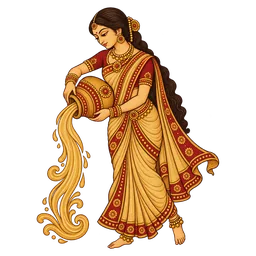
- Its symbol: a lady pouring water from a pot.
- Stairs: a restaurant reached by stairs.
Its lords
Shani and Rahu; mainly Rahu.
Glimpses from the houses
- Kumbha is in my own 3rd. When I built my house, the Kumbha symbol was made on my gate, the lady pouring water from a pot. Near the gate there is Rahu's obsessive element, and outside, Budha with Rahu: children who play and jump into my house to get their ball out (B3).
- In the 2nd, for a Makara lagna: group money, many SIM cards, and friends who become family (B2).
- In a child's 2nd: a Kanya-lagna father has Makara in the 5th, so the child's 2nd is Kumbha, and the child says, "Papa, money will come; why do you always take tension?" (B2)
Mina
Giving, the roof, and surrender
Mina is rashi number 12, Pisces. Its environment is giving.
Its guna, dharma, dosha
- Mina is about giving: "Take it, brother, take it, no problem. It will come back to me. Use it."
- Spirituality and abstract ideas.
- Surrender: "Whatever happens, God will see. I am in God's hands. I keep doing my karma and keep singing Hari's glory."
What you will find in it
- Mina represents the roof: the restaurant on the top floor.
Its lord
Brihaspati.
Glimpses from the houses
- In the 2nd, for a Kumbha lagna: he gives his personal resources away to the family. My Kumbha-lagna clients respect a consultation, and they can bear very strong sadhana (B2).
- In the 3rd with Brihaspati: the surrendered words above (B3).
Remember
- A chart shows only numbers: 1 Mesha, 2 Vrishabha, 3 Mithuna, 4 Karka, 5 Simha, 6 Kanya, 7 Tula, 8 Vrischika, 9 Dhanu, 10 Makara, 11 Kumbha, 12 Mina. After 12 comes 1.
- The number in a house is the rashi, never the house number. 6 in the top diamond means Kanya is in the 1st house.
- The rashi in the 1st sets the rashi of every other house: count up by one, counter-clockwise. Same box, different colour.
- Lords: Mangala, Shukra, Budha, Chandra, Surya, Budha, Shukra, Mangala with Ketu (mainly Ketu), Guru, Shani, Shani with Rahu (mainly Rahu), Guru.
- A rashi is a currency of energy, with its own guna, dharma, dosha.
- A rashi is an environment, never a person. The rashi gives the flavour; the event comes from the house; the graha is the character.
- Each rashi needs its own nourishment. Stop watering the rashi of the lagna, and illness comes.
- The major predictions come from the rashi, and rashi aspects, read through the Jaimini padas, matter more than graha aspects.
Check yourself
1. The number 6 is written in the top diamond. What does it mean?
The top diamond is always the 1st house. The 6 is the rashi number, and 6 is Kanya.
2. Which rashi does the number 10 represent?
9 is Dhanu, 10 is Makara, 11 is Kumbha.
3. Kanya (6) rises. Which rashi falls in the 2nd house?
Counting up from 6, the 2nd house gets 7, Tula.
4. Lagna is Mesha (1). Which rashi is in the 7th house?
The rashis go 1, 2, 3 and so on, so the 7th gets 7 (Tula).
5. Which rashi is number 8, and whom do we mainly take as its lord in this method?
Vrischika has two lords, Mangala and Ketu, and mainly we take Ketu.
6. Which rashis does Shukra own?
Shukra owns Vrishabha and Tula.
7. What is a rashi, in the image I use?
Each rashi is a different currency of energy. It tells us its qualities, its nature and its faults.
8. "He is a Mesha, so he is aggressive." What is wrong with this sentence?
The rashi is the setting. The kitchen is the same; what happens in it depends on who is standing there.
9. Which rashi has "no storage", so that money does not stay?
Mesha is fiery and fast and always starts something new, but it has no storage energy.
10. Which rashi is the rashi of Ma Lakshmi and of Parashurama?
Vrishabha, the bull, has milk, curd and food, collects resources, and the person there becomes Parashurama when his family is touched.
11. Which rashi represents the mines, the crocodile's "this is mine" and the boundary?
In Makara everything is marked as one's own, and there is so much stock that there are endless options.