Part A · Foundations
The Nine Grahas
Navagraha · the nine characters
A graha is a character. He carries his own nature, and the story of how he appeared, into every house he enters, and he delivers the result; the house and the rashi decide what is delivered and how.
In one minute
- Nine characters: Surya, Chandra, Mangala, Budha, Brihaspati, Shukra, Shani, Rahu and Ketu, each with a clear temperament.
- Short names: the software writes Su, Mo, Ma, Me, Ju, Ve, Sa, Ra and Ke in the house where each one sits.
- The delivery agent: the graha is the king, the delivery boy, the messenger. He carries 20 percent of a prediction.
- Svarupa: learn each graha's prakatya, how he appeared and was born, because we use the story in prediction.
- Chandra's account: Tara, Daksha's twenty-seven daughters and Rohini. No graha received more curses, so no graha needs more remedies.
Quick facts
- Grahas
- 9, listed from Surya Narayana to Ketu
- In a chart
- Su, Mo, Ma, Me, Ju, Ve, Sa, Ra, Ke
- Role
- The character, the delivery agent of results
- Weight
- 20 percent of a prediction
- Their stories
- The Navagraha Purana
- The king
- Surya Narayana, the centre of the solar system
- The mind
- Chandra, the karaka of man and of emotion
Who are the nine?
After the twelve houses and the twelve rashis come the nine grahas. When I list them in class, first comes Surya Narayana, the Sun; then Chandra, the Moon; Budha, Mercury; Shukra, Venus; Mangala, Mars; Brihaspati, Jupiter; Shani, Saturn; and then Rahu and Ketu. Who each of them is, and the story of how each appeared, I teach in this chapter. In this book you will usually see them in the order of the table below.
We call a graha the karaka, the significator, of what he stands for: Chandra is the karaka of the mind, of herbs, of happiness and of peace.

Surya Sun
Su
The king at the centre
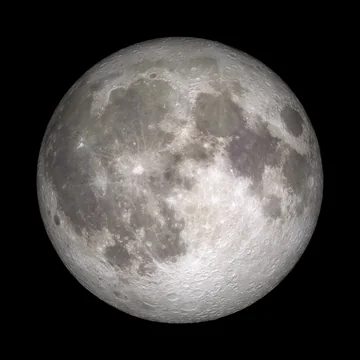
Chandra Moon
Mo
The mind: the most beautiful, and the most cursed

Mangala Mars
Ma
The commander who speaks less and hits more
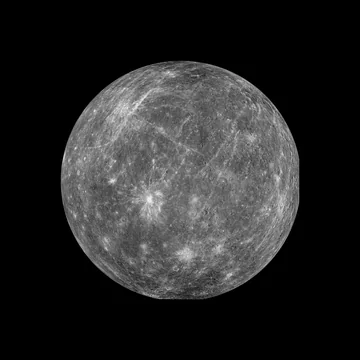
Budha Mercury
Me
The consultant, the chatterbox, the child
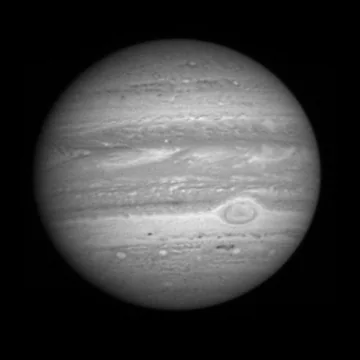
Brihaspati Jupiter
Ju
The guru, and everyone's money
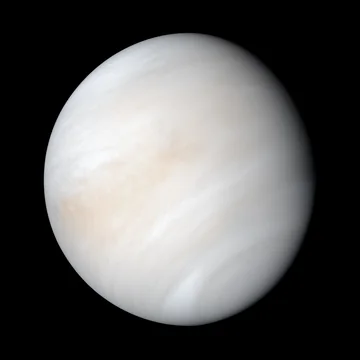
Shukra Venus
Ve
Luxury, charm, and Shukracharya
Shani Saturn
Sa
The old labourer who repeats history

Rahu
Ra
Illusion, endless hunger, and the outsider

Ketu
Ke
The headless body that cuts and seeks
Photographs of the Sun, Moon, Mars, Mercury, Jupiter, Venus and Saturn: NASA. Rahu and Ketu are shown as symbols.
| Graha | English | In a chart | Temperament, in my words |
|---|---|---|---|
| Surya | Sun | Su | Authority, ego, "I", leadership, the father, heat |
| Chandra | Moon | Mo | Mind, emotion, mother, mood, the masses |
| Mangala | Mars | Ma | Energy, courage, fight, action, speed |
| Budha | Mercury | Me or Bu | Intellect, speech, trade, numbers, the consultant, the child |
| Brihaspati | Jupiter | Ju | Wisdom, teacher, dharma, guidance, everyone's money |
| Shukra | Venus | Ve | Love, luxury, fine dining, beauty, charm, a refined aesthetic sense |
| Shani | Saturn | Sa | Discipline, delay, labour, repeat mode, the lower level, age |
| Rahu | North node | Ra | Craving, obsession, foreign, shortcuts, outsider |
| Ketu | South node | Ke | Detachment, cutting, breaks, spirituality, a headless body |
Do not try to memorise this table today. Read it, and then keep coming back to it while we go through the houses. Each time you see a graha at work, its character will sink in.
Their short names in a chart
In a chart the grahas are not drawn. Their short names are written inside the house where each one sits. The software you use writes the English short name, so you must be able to decode it at a glance.
| Written in the chart | English | Sanskrit name | Also called | Badge in this book |
|---|---|---|---|---|
| Su | Sun | Surya | Surya Narayana | Su |
| Mo | Moon | Chandra | Chandrama | Ch |
| Ma | Mars | Mangala | Mangal | Ma |
| Me | Mercury | Budha | Budh | Bu |
| Ju | Jupiter | Brihaspati | Guru, Devguru Brihaspati | Gu |
| Ve | Venus | Shukra | Sk | |
| Sa | Saturn | Shani | Shani Maharaj, Shani dev | Sa |
| Ra | Rahu | Rahu | Ra | |
| Ke | Ketu | Ketu | Ke |
The last column is only for this book. In the profile boxes of the house chapters I mark each graha with its Sanskrit short name, so Chandra is Ch, Budha is Bu, Guru is Gu and Shukra is Sk. In the software chart the same grahas appear as Mo, Me, Ju and Ve. They are the same graha.
So when you see "Sa" in a box, say to yourself: this is Shani Maharaj, Saturn. When you see "Ma": "Ma" means Mars, and Mars means Mangal. When you see "Mo": Moon, and Moon means Chandrama. "Ju" is Jupiter, our Guru.
When two or more short names are written in the same box, those grahas are sitting together in the same rashi and the same house. We call this a yuti, a conjunction. If "Ra" and "Ju" are written together in the box with 3, there is a yuti of Rahu and Guru in Mithuna rashi.
Say it in a full sentence
Get into the habit of saying every graha's position as a full sentence. If I ask you, "In which rashi is your Ketu?", you should be able to answer at once, "My Ketu is in Simha rashi." "In which rashi is your Sun?" "In Simha rashi." And then the house: "My Shani is in Mina rashi, in the 5th house."
Graha, rashi, house: three facts for every graha. When you can say these three facts for all nine grahas of a chart, you have read the chart. Chapter A5 takes you through it step by step.
A chart I made in class. Find "Sa".
Think of them as people
When I teach, I do not say "Mangala is a malefic planet". I say: imagine a young soldier. He has a lot of energy; he speaks less and hits more. Put that soldier into your 4th house, your home. What happens at home? Fights. Renovation. Furniture moving around the room. That is how we predict. We do not memorise "Mars in the 4th = domestic disturbance". We put the soldier in the home and watch.
The same with the others. Shani is the old labourer who works hard, repeats himself and resists change. Budha is the young-looking chatterbox who talks big, connects people and is as stubborn as a child. Brihaspati is the elder who gives advice. Ketu is a headless body: he feels, he cuts, but he cannot see where he is going. Rahu is the one who wants everything right now.
Two people are very hard to change: an old man and a child. Both are stubborn. That is Shani and Budha. Shani works in repeat mode and wants the same thing again and again; Budha, the child, wants only what he likes, and only the way he likes it.
Each graha comes from his own loka
Why does a graha bring the same qualities wherever he sits? Because he comes from his own loka, his own world, and he brings the qualities of that world with him. Surya comes from Surya-loka, so wherever he dominates, you see the traits of the Suryavansha, the Sun's dynasty.
These are beautiful qualities, and you have to feel them, not just read them like a classroom list. When you feel the character, the prediction comes by itself.
The graha delivers; the house and the rashi decide
First comes the house, then the rashi, then the graha (Chapter A1). The graha is the one who comes into that rashi: what kind of king, what kind of delivery boy, what kind of ruler or messenger is arriving there. In my method he carries 20 percent of the prediction.
So the graha is like a delivery boy. The house he owns is his cloud kitchen, where the food is made, and from there it goes out. The house where he sits is where it is delivered. There is always a difference between the source and the sink. You will learn to use this fully in Chapter B1.
Chart one from class: 8 is written in the 1st house, Vrischika. For now take its lord as Mangala (Chapter A3).
And when a graha sits in a rashi, he gives his own flavour on top of the rashi's flavour. There is a flavour of the rashi and a flavour of the planet, together.
A student asked: "Which number has to be written with the Sun?"
Whatever number is written with the Sun, whatever rashi it is, if the Sun sits on the lagna you will see the Sun's results. If the Sun is not peedit, not afflicted, you will see exactly these things, because these are the lakshan, the signs, of the Suryavanshi. Whether Surya Narayana is at 0 degrees or at any other degree, you will see these results. The graha carries his own nature into any rashi.
But the rashi still changes how he can use it. If Surya goes into Tula, where he is debilitated, the same king can no longer work independently. You will see this in his profile below.
We make combinations, we do not memorise
When two grahas sit together, you do not look for a memorised line. You combine their characters. In the houses you will see me do this again and again: Budha with Shani, Mangala with Rahu, Shukra with Rahu. This is what I will teach throughout. We do not memorise big things; we make combinations.
Learn the story of each graha
You have to understand the svarupa of the nine grahas, and by svarupa I mean their prakatya: how each one appeared, how each one was born. This is not decoration. We use the story in prediction.
The course is called AstroIITians, and that means you question everything from the basics. The stories are part of those basics. There is a book called the Navagraha Purana in which you will find the stories of all the planets.
How the story is used
Take Budha. How was Budha born? Chandra had a union outside marriage with mother Tara, who was the wife of Devaguru Brihaspati. Budha is that child. Now suppose someone asks you, "Has an illegitimate child been born? Is this my son or not?" Whose involvement will you look for? Budha's. And who commits that mistake in the story? Chandra.
So Chandra in the 2nd house, the house of the family lineage, means that somebody in the lineage produced a child outside marriage: somebody with a brother's wife, somebody with a maternal uncle's wife, and a varna-sankara, a child of mixed lineage, entered the vansh. Budha in the 2nd: an illegitimate child has been born somewhere in the lineage. And with whom did it happen in the story? With Devaguru Brihaspati, the one who was wronged. So Brihaspati in the 2nd says it happened with somebody of this lineage.
Chandracommits the act
Tarawife of Brihaspati
Brihaspatithe one wronged
Budhathe child
a union outside marriage
married
In the 2nd house, the house of the lineage:
- Chandra in the 2nd: somebody in the lineage produced a child outside marriage.
- Budha in the 2nd: such a child has been born somewhere in the lineage.
- Brihaspati in the 2nd: it happened with somebody of this lineage.
Take Surya. When Surya was born, mother Aditi found him very hot. After some time all the mothers took him in turns, half an hour each, forty-five minutes each. So if Surya dominates someone's 1st house, the house of personality, the person is "hot". What does hot mean? It becomes difficult to bear him, difficult to live with him. Why? Because of the Sun's heat.
I am only giving you the basic here. I am not predicting yet; I am showing you that we always use the story. Do not go into prediction now; just understand the point. The planets come much later in the method. But whenever you study a graha, ask: what is his story, and how would that story show itself in this house?
Suryavanshi and Chandravanshi
We all come from lineages, and the grahas carry the qualities of theirs.
The kings of the Suryavansha, the Sun's dynasty, had multiple wives. So if Surya comes into someone's 7th house, the house of relationship, can there be multiple relationships? There can be, because that is the quality of the Suryavansha. Chandra had many wives, twenty-seven of them, so with Chandra in the 7th house there will be many wives, many partners. And Brihaspati was attracted to his brother's wife and destroyed the child in her womb. So when Brihaspati comes into the 7th, whose debt comes? A debt within the family's own relations.
When Surya dominates a chart, I call it a Suryavanshi chart. The person becomes a manager, tries to control others and gets his own work done through others. He is authoritative and has ego inside him. He is also called a daanveer, a great giver, and he is nyaypriya, a lover of justice. On the lagna this comes out completely, with the body signs too, and you will read them in Chapter B1.
When Chandra sits on the lagna, we call the person a Chandravanshi. He carries Chandra's emotional, changing nature, and he carries Chandra's curse too: the curse of women. You will understand why when you read Chandra's account below.
Suryavanshi
- The Suryavansha kings had multiple wives: Surya in the 7th can give multiple relationships
- A manager who tries to control others and gets his work done through them
- Authoritative, with ego inside
- Daanveer, a great giver; nyaypriya, a lover of justice
Chandravanshi
- Chandra had twenty-seven wives: Chandra in the 7th gives many partners
- Chandra on the lagna makes a Chandravanshi
- Chandra's emotional, changing nature
- Chandra's curse: the curse of women
The account of Chandra
Here things get a little emotional, because the Moon is the karaka of emotions. If I do not teach Chandra in that way, you will not grasp the marm, the inner core of the matter.
Anusuya's darling
Chandra's mother is Anusuya, and his father is Atri Rishi. Mother Anusuya loves her lala, her darling child, Chandra, very much. After a great deal of effort and labour, Mother Anusuya received a boon from Brahma ji, among Brahma, Vishnu and Mahesh, and from that boon Chandra takes birth from her.
Chandra is the karaka of herbs (jadi-buti), the karaka of happiness and the karaka of peace. And Chandra is very beautiful. His radiance, his kanti, is said to be like the radiance that comes out of the body of Mahavishnu; it is a form of it. On a moonlit night we all become happy looking at Chandra. We want to keep gazing at him.
Now look at that Chandra: how many punishments he received, how much he was rebuked.
Chandra and Tara
First, in his adolescence, Chandra goes to Devaguru Brihaspati to learn. There, Tara takes a liking to him. Mother Tara, the wife of Devaguru Brihaspati, knows what she is doing. Still, she creates utkantha, a longing, in the heart of an adolescent, and Chandra begins to love her. When Chandra begins to love, that love takes a different form. Tara meets him sometimes here, sometimes there.
Remember, Chandra's mother, Mother Anusuya, is very beautiful. She is a pativrata, wholly devoted to her husband, the greatest tapasvini, a woman of austerity. And Tara asks him: "Who is more beautiful, me or Mother Anusuya?" You are asking a boy, an adolescent, who is more beautiful? The mother is very beautiful. But the experiences of adolescence are very new to him.
Tara plays with him. Tara traps him. And from the beginning Chandra knows perfectly well that this woman is the wife of Devaguru Brihaspati. The relationship is established, and after that he takes her to his palace. There he asks her one simple question: "Will you always stay with me?" Tara agrees, and for a long time they live together. Budha is the child of this union.
Meanwhile Devaguru Brihaspati keeps searching, and then he comes to know that she has gone. Indra, who is his disciple, attacks Chandra. And Shukracharya, who is Shukra, takes Chandra's side and fights the devatas. Then Brahma ji comes, and he hands Tara back to Devaguru Brihaspati.
And Devaguru Brihaspati tells Chandra: "From now on, whatever function takes place at your house, I will not give my blessing to it."
Why Mrigashira carries that curse
That is why, when a graha sits in Chandra's Mrigashira nakshatra, say Shukra has gone there, sitting in the 7th house or in the 9th house, the person does not receive the grace of the Brahmins. You will see many crises come in the marriage. In Mrigashira, whose deity is Chandra, the grace of Devaguru Brihaspati is not received. Things cannot happen according to niyam, according to rule, and so there is a lot of trouble.
The curse of women
So the first and biggest suffering that reached Chandra came because of a woman. And the Chandravanshis, all who have Chandra on the lagna, carry a curse: the curse of women. They should be very careful of women. They feel loneliness, and they stay troubled day and night.
That is why Chandra has a very big role in heartbreak: they did not get the one they loved.
Daksha's daughters and Rohini
On the other side, Chandra's marriage takes place. Daksha Prajapati, who is Shani, who represents Makara rashi, has twenty-seven daughters, and Chandra is married to them. These daughters are the twenty-seven nakshatras: Ashwini, Bharani, Krittika, Rohini, Mrigashira, Ardra, Punarvasu, Pushya, Ashlesha, and so on.
And once again, Chandra stays only with Rohini. The rest he does not accept even as maidservants. He tells them, "You go away." So once again he receives a very big curse, this time from Daksha Prajapati. Rohini receives it too.
When the curse comes, Chandra's lalima, his glow, goes away. The beauty he had, his loveliness, goes. Chandra is troubled and afraid: "What will happen now? Now I can be seized. My size will always keep waxing and waning."
The graha with the most curses
That is why many remedies have to be done for Chandra: the Moon has received the most curses. Indra has also received curses. He got the throne, and to save it he received many curses, in rajoguna, the mode of passion. But Chandra received curses of a kind that destroy, tahas-nahas, his happiness.
The Moon has received the most curses, so the Moon needs the most remedies.
That is why, in any native's chart, the Moon and the 4th house should both be very strong. The Moon is our core. The Moon represents the mind.
Anusuya's darling
The son of Atri Rishi and Mother Anusuya, born from Brahma ji's boon: the karaka of herbs, happiness and peace.
Tara
Studying with Devaguru Brihaspati, the adolescent Chandra is drawn by Tara, Brihaspati's wife. Budha is born.
The fight
Indra attacks Chandra; Shukracharya fights on Chandra's side. Brahma ji hands Tara back.
Brihaspati's curse
No blessing on any function at Chandra's house. Mrigashira carries it.
Daksha's daughters
Married to the twenty-seven nakshatras, Chandra stays only with Rohini.
Daksha's curse
His glow goes, and his size keeps waxing and waning.
The Moon has received the most curses, so the Moon needs the most remedies.
The nine grahas one by one
Here is each graha laid out the same way, so that you can compare them: who he is, how he behaves, his story where I teach one, a few glimpses of him in the houses, and his rashis. The glimpses are only pointers; the full teaching sits in each house's chapter.
Surya
The king at the centre
Surya Narayana, the Sun, comes first among the nine.
Who he is
- The king. In our saurmandal, the solar system, the Sun keeps everyone on his axis. The Sun is the centre, the Sun is the king, and that is why he manages everyone and tries to control.
- Surya controls the nine grahas. So where he is strong, won't he control others?
- He gives independence: "We are enough in ourselves. We don't need you."
- Authority, ego, the "I", leadership, the father, and heat.
- Highly practical.
How he behaves
- He gets his own work done through others and does not do much work himself.
- He speaks with authority and control, not with violence: "If you were told to do this, you should have done it. If your father is telling you to do something, you should do it."
- He wants a source that stays stable and always gives power, not a lot one day and nothing the next: "Son, study. Education is capital. A degree is capital. A government job is capital."
- Regularity and balance. Surya balances kapha, pitta and vata, so his food must be fresh, balanced and on time, and once a standard is set it must be kept.
- Discipline, pride in his lineage, and a king's love of justice.
His story
- Mother Aditi found the newborn Surya too hot to hold for long, so all the mothers took turns. A person dominated by Surya is "hot": hard to bear, hard to live with.
- The Suryavansha kings had multiple wives, so Surya in the 7th can give multiple relationships.
Glimpses from the houses
- On the lagna: the Suryavanshi chart. The hair goes early, the eyes are light brown, there is trouble in marriage, and husband and wife get along less. "My husband is very controlling, always I, I, I." "My husband manages a thousand people in his office and looks after an entire state." (B1)
- In the 3rd: good Gayatri japa; many medals; a person who teaches like a principal; government buildings and officers near the home; a routine-oriented mind that enjoys politics and the news; younger siblings made to fetch water (B3).
- In the 4th: he becomes the big boss at home and gets everyone else to do the work; the society is very good (B4).
- In the 5th, strong, with Brihaspati: everything comes by inheritance (B5).
- In the 7th: husband and wife sleep separately, because of ego (B7).
His rashis
- Owns Simha (5).
- Debilitated in Tula. There his independence turns into "Come along with us." The manager becomes dependent on the partner, and others get their work done through him. He works after asking, always needs a partner and guidance, cannot do it by himself, and doubts himself. This is what debilitation does.
Chandra
The mind: the most beautiful, and the most cursed
Chandra, the Moon, is the karaka of the mind.
Who he is
- The karaka of man, the mind, and the karaka of emotions. The Moon is our core.
- The karaka of herbs, of happiness and of peace.
- Very beautiful, with a radiance like that of Mahavishnu's own body.
- A psychic, intuitive nature.
- The 4th house, the house of the mother, is naturally given to Chandra. That is why the lord of the 4th house is Chandra.
How he behaves
- He always changes: sometimes emotional, sometimes crying, sometimes fighting, sometimes complaining. You cannot tell what runs in his mind, when his day turns into night, or what will hurt him.
- His voice is the voice of mood: "You cannot understand me, how I am feeling. Do you know what goes on inside me?"
- Sweet words that change with the mood. If he is happy today, get it in writing today; later he will change.
- Together with the 4th house he is called the karaka of happiness. In Shakata yoga, and whenever daridra yoga, the yoga of poverty, forms, the Moon's role becomes very big. Man ke haare haar hai, man ke jeete jeet: lose in the mind and you have lost; win in the mind and you have won.
His story
- The son of Anusuya and Atri; Tara and Budha's birth; Brihaspati's curse; the curse of women; Daksha's twenty-seven daughters and Rohini; the waxing and waning. All of it is told above, in The account of Chandra.
- Chandra had twenty-seven wives, so with Chandra in the 7th there will be many partners.
- Chandra commits the mistake in Budha's story, so Chandra in the 2nd shows a child born outside marriage in the lineage.
Glimpses from the houses
- On the lagna: the Chandravanshi, in any rashi. Moody and easily hurt; accused whenever he distributes things; a milky white face; quick to catch nazar, the evil eye; unable to keep continuity, something new every day; his eating disturbed whenever trouble comes; many shraap, curses, and big, costly fancies; and someone who must never receive a curse from women (B1).
- In the 2nd: sweet words that change with the mood, and a family that goes through heavy emotional cycles. In a father's chart: "Papa, you change; you say it, but you don't give it at that time." (B2)
- In the 3rd: very sweet singing; with another graha there, people go mad listening to him speak. A neighbourhood near water and peaceful spots; arts, singing and romantic literature. But in the 3rd he has no eyes, only ears, so he believes rumours (B3).
- In the 11th, as with Budha there: desires fulfilled from childhood (B11).
His rashi
- Owns Karka (4), the rashi of emotions.
Mangala
The commander who speaks less and hits more
Mangala, Mars, is the senapati, the commander of the army.
Who he is
- The commander. Where Mangala sits, a senapati sits.
- The young soldier with a lot of energy, who speaks less and hits more.
- Brave, passionate, logical and short-tempered.
- Energy, courage, fight, action, speed, and the heat of pitta.
How he behaves
- "You need to do it." He speaks less and hits more. When he speaks, he speaks boldly, first and fast.
- Wherever Mangala is, the person is very active there.
- He knows how to bring food to the plate, and he takes heavy responsibility for it: "Do what you're told. The food on your plate, we earn it and give it to you. So eat quietly and do as you are told."
- He wants command, control and power.
- Once he fights, it is band-baaja-baaraat afterwards: everything is wrecked.
Glimpses from the houses
- On the lagna: injuries, a face that goes red in anger, manglik, uniforms and tight clothes, few friends, a short temper (B1).
- In the 2nd: eats fast, and throws the food he does not like: "Twelve years you have been cooking and you still cannot make food!" In the 2nd he is the karaka of dhatu, which is why Ketu there brings dental or mouth trouble. Mina lagnas are very responsible from an early age and start teaching tuitions (B2).
- In the 3rd: heavy singing, like Punjabi songs; many medals; a highly technical, fast-processing brain; sports and fast driving; police quarters, security or a restricted area nearby; and a very good position in the army, the police, the BSF (B3).
- In the 4th: the soldier at home, very active there: fights, constant breaking and construction, the interior always changing; he protects his mother and fights with her; a neem tree near the house; guards and security around it (B4).
- In the 5th: solves problems very well. In the 6th: the prostate (B5, B6).
- With Rahu: a very violent husband, or a neighbour who is always fighting. With Shani: the khatre ka khiladi, the daredevil at the wheel (B7, B3).
His rashis
- Owns Mesha (1) and Vrischika (8). In Vrischika, Ketu is also lord, and mainly we take Ketu.
Budha
The consultant, the chatterbox, the child
Budha, Mercury, is the consultant.
Who he is
- The consultant, and badbola: one who talks big, a chatterbox.
- The young-looking chatterbox who talks all the time and connects others. He looks very young, with good metabolism.
- A little knowledge of everything. He is very sharp in other people's problems and tells them the solution: the consultant, the diplomat, the problem-solver.
- He memorises things very quickly.
How he behaves
- He speaks in full expressions: "You know what, what he was doing?" With Shukra the voice turns polite: "Can you please do this one?"
- He makes money through counselling and solving problems.
- He is always playing with numbers, and he connects two parties. "The neighbour's land is selling for 10 lakh. He is selling it to you for 12? I'll get it done for 10." And he got it sold to him for 8.
- The child in him is stubborn about what he likes: "I only want pasta, only Maggi. My food doesn't look pretty; I won't eat it. Give it to me in a nice bowl. You didn't put that masala."
- His things are earphones, mobiles, pens and every kind of electronic item.
- His people are the mama, the bua, the sister and the behnoi. "My bua troubles me": look at Budha, or at the 6th house, and see where Budha is creating the problem.
His story
- Budha is the child of Chandra and Tara, born outside marriage. So when the question is "Is an illegitimate child born? Is this my son or not?", look for Budha's involvement. Budha in the 2nd: such a child has been born somewhere in the lineage.
Glimpses from the houses
- On the lagna: the consultant who looks young, with a V-cut face; the mama, bua, sister and behnoi shape his personality (B1).
- In the 3rd: writes very well; the catalyst who keeps getting everyone else's work done; romantic songs with Shukra; children, schools and parks nearby; brilliant in debate, with many hobbies, writing and travel (B3).
- In the 4th: many electronic items, an apartment, a house on the third floor, many small plants (B4).
- In the 5th: so many contacts (B5).
- In the 11th: desires fulfilled from childhood (B11).
- With Shani in the 10th: the CA. With Shani in the 7th: sexual problems and tendencies. Alone in the 7th: a husband who keeps two families (B10, B7).
His rashis
- Owns Mithuna (3) and Kanya (6).
Brihaspati
The guru, and everyone's money
Brihaspati, Guru, Jupiter, is Devaguru, the guru of the devatas. Indra is his disciple.
Who he is
- The elder who gives advice: wisdom, the teacher, dharma.
- A blessed person, spiritual, wise, without jealousy and naturally magnetic, whom society sees as a guide and an advisor.
- Devaguru, whose blessing every function needs.
How he behaves
- He talks with pauses, and he even writes with pauses, putting capital letters in the middle on his own.
- He writes long sentences, like a granth, in story format, so that it is understood. Answers fill pages.
- He speaks directly, with wisdom. He gives gyan, and he holds you to your word: "You promised. Now you have to do it."
- Sattvic food, lots of sweets, lots of fruit: "Bring fruits for me."
- He is temple money, trust money, government money: everyone's money. When such money is used at home for one's own gain, curses come. Never use anyone's things for free.
- In a rashi of Shukra, such as Vrishabha, he makes banks.
His story
- He is the husband wronged by Chandra and Tara. So Brihaspati in the 2nd says the matter of the lineage happened with someone of that lineage.
- His curse on Chandra: no blessing on any function at Chandra's house. That is why Mrigashira carries it.
- He was attracted to his brother's wife and destroyed the child in her womb. So Brihaspati in the 7th brings a debt within the family's own relations.
Glimpses from the houses
- On the lagna: "This guruji is very good; a thousand followers listen to him in a hall every day." (B1)
- In the 2nd: good at banking and investing in gold; solves the family's problems with knowledge. In Tula there: gyan about the relationship and about money, guilt over every broken promise, and the husband who is also the guru (B2).
- In the 3rd: good Vedic chanting; temples, banks, schools and many trees nearby; a slow processor, but wise and spiritual; he enjoys reading and teaching. In Mina there: "Whatever happens, God will see." (B3)
- In the 4th: a big house. In the 5th: he studies like Brihaspati himself, and, strong with Surya, everything comes by inheritance. In the 6th: the liver. In the 11th: a huge social circle (B4, B5, B6, B11).
- In Mesha in the 9th: very egoistic and fanatic about his religion (B9).
His rashis
- Owns Dhanu (9) and Mina (12).
Shukra
Luxury, charm, and Shukracharya
Shukra, Venus, is Shukracharya.
Who he is
- Love, luxury, fine dining, beauty and charm.
- Usually beautiful eyes, charming speech, a soft nature and a highly refined aesthetic sense.
- Shukracharya, who once fought the devatas on Chandra's side.
How he behaves
- His speech is soft.
- He loves luxury, high-end fashion and fine dining: the five-star hotel, the candle-light dinner, the fancy place.
- Beautiful things, a refined aesthetic sense, and wealth.
His story
- When Indra attacked Chandra over Tara, Shukracharya took Chandra's side and fought the devatas.
- Shukra sitting in Chandra's Mrigashira nakshatra, in the 7th or the 9th, does not receive the grace of the Brahmins, and the marriage sees crises.
Glimpses from the houses
- On the lagna: "A thousand-crore man; whomever he touches becomes a billionaire." Yet you will also find Shukra on the lagna and no money at all: God gave only beautiful eyes. I will teach you that later (B1).
- In the 2nd: excellent for wealth; speaks beautifully and charmingly (B2).
- In the 3rd: romantic songs, with Budha; markets, spas and luxurious places nearby; highly refined communication, always thinking about aesthetics and relationships (B3).
- In the 5th: weighs everything in money, and brings everything into the family. In the 6th: the kidneys (B5, B6).
- With Shani: romantic sad songs. With Ketu or Rahu: heartbreak songs. With Rahu outside the gate: boys having affairs (B3).
His rashis
- Owns Vrishabha (2) and Tula (7).
Shani
The old labourer who repeats history
Shani dev, Saturn.
Who he is
- Discipline, delay, hard labour and age.
- The old labourer who works hard, repeats himself and resists change. The old man is hard to change.
- He represents the lower level.
- In Chandra's account, Daksha Prajapati is Shani, and represents Makara.
How he behaves
- Repeat mode: he wants the same thing again and again.
- He repeats history. Argue with him and he will dig up buried corpses, gade murde: "You did this then, then this, and now this. Later you will do this. You promised this before."
- He collects as much as he can.
- He tells lies, because Shani represents the judgement of the lower level.
- He speaks slowly, creates a high-pressure atmosphere when he speaks, and is harsh in his words at times.
- A workaholic mind, but one that restricts change.
- Someone who has never seen a thing goes mad when he sees it. At a party he eats like mad; going somewhere, he wants the expensive things.
- He enjoys the poor man's food: the cheapest place, the dhaba, natural food.
- He works hard and faces delays. Results come only after struggle, or after external validation: "Brother, I am doing well, no?"
Glimpses from the houses
- On the lagna: constant effort and discipline, results after struggle (B1).
- In the 2nd: slow speech, early poverty or delay in wealth; with Makara, the fridge and cold food (B2).
- In the 3rd: sad songs; threats through authority and the police; a factory, a broken house or tin sheets nearby; thyroid trouble, and Budha's qualities grow old early (B3).
- In the 4th: lots of junk at home. In the 5th: believes only in hard work. In the 6th: pain in the legs, arthritis (B4, B5, B6).
- With Ketu: frozen food every day, and the mother says, "He is mad number one; he eats anything, eating Maggi at night." I tell you this one because I myself could not understand why I had such an obsession with it. Control it slowly (B2).
His rashis
- Owns Makara (10) and Kumbha (11). In Kumbha, Rahu is also lord, and mainly we take Rahu.
- Exalted in Tula: patience. "Be patient, be patient; wealth will come slowly." He works regularly and patiently, does not switch jobs, and spends slowly on things that last. He tells a lie only to save the relationship and the peace of the family. In Mesha he tells it in a hurry.
Rahu
Illusion, endless hunger, and the outsider
Rahu is illusion and endless hunger.
Who he is
- Craving, obsession, the foreign, shortcuts and the outsider. He wants everything right now.
- Rahu is illusion.
- Rahu has no lower end.
How he behaves
- He speaks without boundaries. He tells half, tells it wrong, exaggerates and compromises the truth: "We went with him; he beat them so much you can't imagine." "My nana had so much land that half went into the Ganga and the other half we just donated. All this you see was our land; we gave it to them."
- Endless hunger, never full. He opens a big mouth, because Rahu has no lower end. He has no filter: he eats anything, any amount, at any time, with no timetable, even while watching films. Pran jaye par bhojan na jaye: let life go, but not the meal.
- The more illusion you create, the more he likes it. Put oregano on it and he will like it. He wants the tangy taste, "no fun without chatka", and the European herbs. He will not like methi; he will like basil leaves.
- Fancy and exotic things, photographed and shown off: "OMG, so yum." He must try everything once.
- Massive desires and early success. He may feel like an outsider, networks better outside his own state and family, and treats friends as family.
Glimpses from the houses
- On the lagna: massive desires, early success, speech without boundaries, the outsider (B1).
- In the 2nd: half-truths, the desire for massive wealth, tamasic food, endless hunger, a gap between the teeth, and he will smoke; he always gets along with outsiders (B2).
- In the 3rd: someone's papers lost, forgery, lies and false rumours; a hustler's mind for quick money and outsmarting others; reckless driving; a wealthy, showy neighbourhood near corporate hubs (B3).
- In the 4th: vastu dosha; a transformer or a big drain near the house (B4).
- In the 5th: searches girls on Instagram; solves problems with the back of his hand (B5).
His rashi
- Kumbha (11), with Shani; mainly we take Rahu. Kumbha represents Rahu.
Ketu
The headless body that cuts and seeks
Ketu is the headless body.
Who he is
- Detachment, cutting, breaks and spirituality. Ketu represents breakage, a break.
- A headless body: he feels, he cuts, but he cannot see where he is going.
- A soul that has not got its food. That thirst remains.
How he behaves
- He speaks very few words: "Hmm, thank you. Good morning." Two or three words, never completed: "What can I even say... I don't have words to express." But the words he does say often come true.
- Repeat mode. Once he likes something, he likes it, with no sense to it. He likes the thela, the street cart, not the five-star.
- Introverted and spiritual, detached from worldly gain and family wealth, and prone to anxiety.
Glimpses from the houses
- On the lagna: introverted and spiritual; few words that come true (B1).
- In the 2nd: cheese and the street cart; detached from family wealth; dental or mouth trouble (B2).
- In the 3rd: an isolated, blocked neighbourhood near old temples, with barren land or others' land beside it; irritated by chatter; trekking, raw music on a single instrument, the occult (B3).
- In the 4th: barren land beside the house; with Mangala, land given away in donation. And because Ketu is the break, the heart's impulse comes in stops and starts (B4).
- In the 6th: problems of the private parts (B6).
His rashi
- Vrischika (8), with Mangala; mainly we take Ketu.
Which rashis each graha owns is drawn in Chapter A3, in Who owns which rashi.
Ganesha rules jyotish. We pray to him that, by his grace, we understand a little of jyotish.
Remember
- Nine grahas, in my listing: Surya Narayana, Chandra, Budha, Shukra, Mangala, Brihaspati, Shani, Rahu and Ketu.
- In a chart they are short names: Su, Mo, Ma, Me, Ju, Ve, Sa, Ra, Ke. Several in one box are a yuti. Say every graha as a full sentence: graha, rashi, house.
- A graha is a character from his own loka. Feel the character, and the prediction comes.
- The graha is the delivery agent, 20 percent of the prediction. The house he owns is his cloud kitchen; where he sits is where it is delivered.
- Learn every graha's svarupa, his prakatya. We use the story in prediction, from the Navagraha Purana.
- Surya is the king at the centre who controls the nine and gives independence; debilitated in Tula, he needs a partner and doubts himself.
- Chandra is the mind, the most beautiful and the most cursed: by Brihaspati over Tara, and by Daksha over Rohini. So he needs the most remedies, the Moon and the 4th must be strong in every chart, and Chandravanshis must guard against the curse of women.
- Budha is the child of Chandra and Tara; Brihaspati is the one wronged; Shukracharya fought on Chandra's side.
- Shani repeats, collects and digs up the past; Rahu is illusion with no lower end; Ketu is the headless body with a thirst that remains.
Check yourself
1. In a software chart you see "Ve". Which graha is it?
Ve is Venus, which is Shukra. In this book's badges Shukra is marked Sk.
2. "Mo" and "Ma" are written in the same box. What does that tell you?
Short names in one box are grahas sitting together: a yuti, a conjunction.
3. Surya sits on the lagna. Which rashi must be written with him for the Suryavanshi signs to show?
Whatever number is written with the Sun, if he is not peedit you see the lakshan of the Suryavanshi; the graha carries his own nature into any rashi.
4. Surya sits in Tula, where he is debilitated. What happens to his independence?
Debilitation turns the gift into its problem: "We are enough in ourselves" becomes dependence on others.
5. Surya dominates someone's 1st house. Using Surya's birth story, what do you expect?
Mother Aditi found the newborn Surya too hot to hold, so the mothers took turns. The same heat shows in the personality.
6. Whose involvement do you look for when the question is about a child born outside marriage?
Budha's own birth story makes him the graha to check, with Chandra as the one who commits the act and Brihaspati as the one wronged.
7. What curse did Devaguru Brihaspati give Chandra?
That is why a graha in Chandra's Mrigashira nakshatra, in the 7th or 9th, does not get the grace of the Brahmins.
8. Why does Chandra wax and wane, in the account I teach?
Daksha's curse took away his glow, and since then his size keeps waxing and waning.
9. Why does Chandra need many remedies?
Indra's curses came in rajoguna, to save his throne; Chandra's destroy happiness itself.
10. Which graha "has no lower end", so he opens a big mouth and his hunger never ends?
Rahu is endless hunger and illusion: the more illusion you create, the more he likes it.
11. Which graha, in my teaching, is "the headless body", a soul whose thirst remains?
Ketu feels and cuts but cannot see where he is going; he is a soul that has not got its food, and likes the street cart, not the five-star.
12. In an argument, who digs up the buried corpses of the past?
Shani repeats history: "You did this then, then this, now this."